

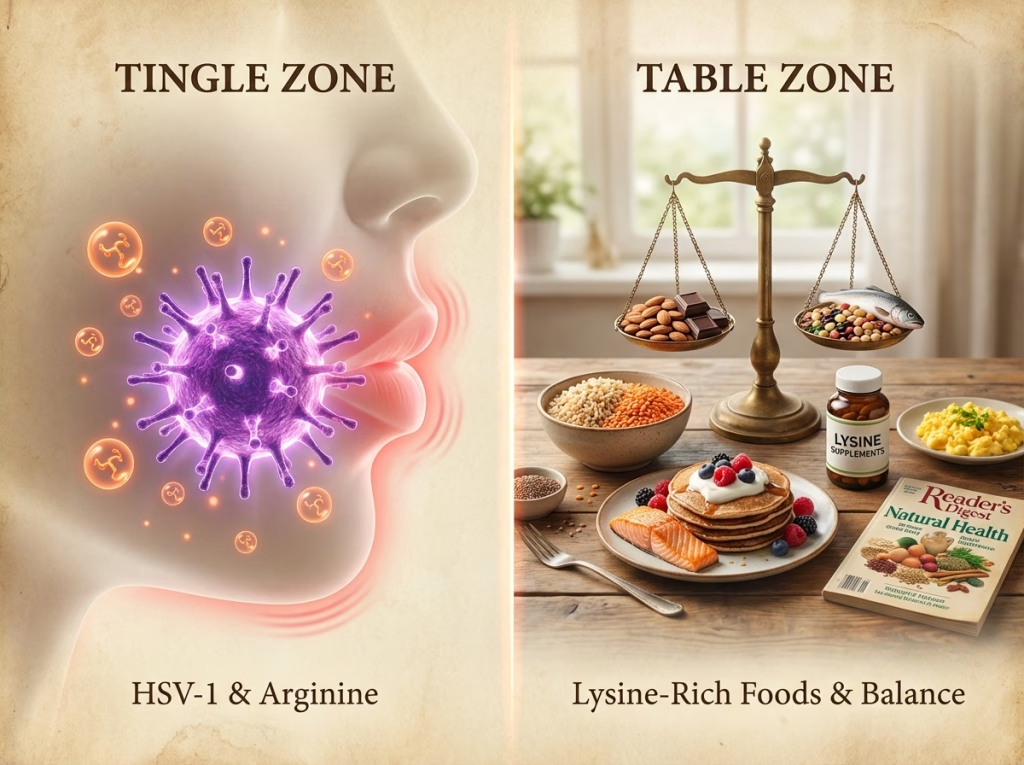
The Tingle vs. The Table: My 40-Year Strategy for Cold Sores
by Lanny Kaufer
I still remember flipping through a Reader’s Digest in the early 1980s and finding a small article about an amino acid called Lysine. The article suggested it could be taken as a supplement to prevent or calm down cold sores. At first glance, it sounded a little too good to be true, but four decades of personal experience proved it to be a total game-changer.
Nowadays, physicians can prescribe antiviral pharmaceuticals to treat the Herpes virus (HSV-1). I’ve never had the need to take one. If you prefer natural, diet-based solutions over a trip to the pharmacy, the “Lysine-Arginine” balance is a secret worth knowing.
The Biological Tug-of-War
Here’s the science in plain English: The virus is like a houseguest that won’t leave – and it has a very specific diet. It needs the amino acid Arginine to multiply. Without it? The virus stays dormant.
That’s where Lysine comes in. It’s a biological “blocker.” Grains, nuts, and most seeds are high in Arginine and low in Lysine. Legumes (beans, peas, lentils, etc.) and animal products are high in Lysine. By flooding your system with Lysine, you’re basically playing a game of biological musical chairs – and making sure Arginine doesn’t have a seat. You’re starving the virus into submission.
The “Grass” Trap (And how to fix it)
Here’s the frustrating part: many of our favorite healthy foods – grains, nuts, seeds, and dark chocolate – are “arginine bombs.” The cereal grains – seeds of the grass family (Poaceae) – play an important role in diets around the world, including mine, but they are high in Arginine. Even the unprocessed grains I eat, like brown rice and whole wheat, can tip the scales the wrong way.
But you don’t have to give up your favorite healthy comfort foods. You just have to be a little strategic. Here are the two “hacks” I use every single week:
- The Brown Rice Trick: Brown rice is a regular go-to food for me, but I never steam it alone. I always add Red Lentils to the pot. Split Mung Beans can work, too. Both are legumes that create a complete protein when combined with grains, boosting the Lysine levels to neutralize the rice.
- The Pancake Fix: I love pancakes and eat them about once a week. To keep them “safe,” I mix buckwheat flour into my whole wheat flour. Because buckwheat is a “pseudocereal” seed, and not a grain, it’s naturally much higher in Lysine.
The Invisible Sparks: Stress and Sunlight
While diet is the foundation, I’ve learned that internal chemistry isn’t the only thing that flips the switch. Environmental “sparks” can be just as reliable at triggering an outbreak.
- Stress: High cortisol levels from physical or emotional stress are a classic green light for the virus.
- Sunlight: For me, intense UV exposure on my lips is a reliable physical trigger.
Fortunately, the fix for the latter is something I already do for comfort and skin cancer prevention: I almost always wear a brimmed hat or a cap with a bill. It acts as a literal shield, keeping the sun off my face and guarding against that UV-induced “tingle” before it even starts.
The Viral Management Chart: Triggers vs. Neutralizers
| Category | Arginine “Triggers” (Viral Fuel) | Lysine “Neutralizers” (The Firewall) |
| LIFESTYLE | STRESS: High cortisol SUN: UV exposure | REST: Sleep, Naps, Chill time SHADE: Brimmed hats & SPF |
| SEEDS & NUTS | Pumpkin seeds, Almonds | LEGUMES: Red Lentils, Chickpeas |
| GRAINS | Brown Rice, Whole Wheat | HIGH-LYSINE PROTEINS: Amaranth, Buckwheat, Eggs, Fish, Beef |
| TREATS | Dark Chocolate, Coconut, Carob | FRUIT/DAIRY: Papaya, Mango, Yogurt |
A Note on Peanuts: While most legumes (like lentils) are safe, peanuts are a major exception. They contain nearly three times as much arginine as lysine, making them a significant viral trigger rather than a neutralizer.
The Power of Pairing
The secret to this strategy is combination. You don’t have to eliminate grains; you just have to “neutralize” them. By pairing your rice or wheat with lentils, chickpeas, eggs, fish, or beef, for example, you shift the amino acid ratio in your favor. Similarly, if you enjoy a “treat” like dark chocolate, balancing it with yogurt, papaya, or mango helps keep the virus in check. If you’re looking for a more exhaustive scientific list of high-lysine foods, you’ll see that many of our daily staples can be strategically balanced to keep the virus in check.”
My Three-Step Protocol
- Daily Maintenance: I take 1,000mg of Lysine every morning. It’s my “insurance policy” against the nuts and whole grains I eat.
- The “Tingle” Strike: This is the most important part. At the very first sign of heat or itching, I bump my Lysine intake to 3,000mg-4,000mg for 24-48 hours. If I catch it in those first few hours, I can usually stop the sore before it ever breaks the skin.
- A Word on Safety: A quick heads-up – don’t stay on those “mega-doses” (above 3,000mg) for months, or even days, at a time. High doses are for short-term strikes. For daily use, keep it lower to stay easy on your kidneys.
Putting the Strategy to Work
The goal isn’t to live in fear of a pumpkin seed or a sunny day. It’s about balance. If I know I’m going to be under a lot of stress or eating a high-arginine meal, I simply “load up” on lysine-rich foods or make sure I’ve got my favorite hat ready.
By managing these ratios, I’ve been able to turn a lifelong nuisance into a non-issue. I hope this data helps you find that same sense of control.
Please Note: I am not a doctor, just a dedicated researcher of my own health. This protocol works for me, but you should always consult with a physician or healthcare provider before starting any new supplement regimen to ensure it’s right for your specific needs.
© 2026 Lanny Kaufer. All rights reserved.